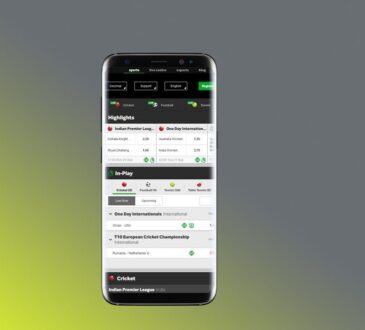


Mobile technology has transformed the way sports fans in Côte d’Ivoire follow their favourite teams and competitions. Fixtures, live scores, team news, performance statistics, and interactive features are now accessible through a single smartphone.
This convenience has also increased the number of sports-focused platforms available to Ivorian users. Their interfaces may look similar, but important differences can exist in legal status, payment methods, customer support, data protection, and account conditions.
Choosing carefully therefore requires more than comparing promotions or selecting the platform with the most colourful application. Users should understand who operates the service, whether its status can be verified locally, and what protections are available if a problem occurs.
Availability Does Not Confirm Local Authorisation
A website may be accessible from Côte d’Ivoire without necessarily being authorised to offer its services in the country. The presence of a French-language interface, support for XOF, or compatibility with local payment methods does not by itself confirm legal status.
Users should look for precise information about the company operating the service. A brand name is not enough. The relevant details include:
- The registered company name
- The exact website domain
- The country of registration
- The physical business address
- The reference of any local authorisation
- The organisation responsible for supervision
- The date and scope of the approval
These details should be checked against current information from the appropriate Ivorian institutions. A licence issued in another jurisdiction may provide information about an operator’s international activities, but it does not automatically prove that the same company and domain are authorised for the Ivorian market.
A practical guide to legal sports prediction in Côte d’Ivoire explains the roles of the relevant institutions and the checks users can perform before creating an account or transferring funds.
Understand the Roles of LONACI and ARJH
Côte d’Ivoire has a national framework governing games of chance and related online services. Two names frequently appear when researching the local market: LONACI and ARJH.
LONACI is the national institution associated with the concession and operation of authorised products, including its Sportcash sports service. ARJH is the regulatory authority responsible for supervision, compliance, user protection, and control of the sector.
These organisations perform different functions. Users should not assume that a commercial relationship with one institution automatically means every website, application, or affiliated domain is covered.
The safest approach is to verify the exact legal entity and domain. A copied application, alternative domain, or unofficial mirror may not have the same status as an authorised service.
Regulations, domains, and commercial arrangements can change. Users should therefore consult recent official information rather than relying on an old review or screenshot.
Examine the Operator Behind the Brand
Recognisable branding can create confidence, but the legal operator is more important than the logo.
Before registration, users should review the website’s terms, privacy notice, and company information. These documents should identify the business responsible for managing accounts and processing transactions.
Warning signs include:
- No company name or registration details
- An address that cannot be verified
- Conflicting company names across different pages
- Terms copied from another website
- A licence logo without a reference number
- Support agents who cannot identify the operating company
- Multiple domains using the same brand without explanation
Users should take screenshots of relevant information before transferring funds. This can provide useful evidence if the website later changes its terms or company details.
Review Mobile Money and Transaction Conditions
Mobile money plays an important role in Côte d’Ivoire’s digital economy. It enables users to complete transactions without depending entirely on traditional bank cards.
Support for a familiar payment method improves convenience, but it does not prove that the platform itself is authorised or reliable. Users still need to examine deposit and withdrawal conditions.
Important questions include:
- Which payment providers are supported?
- Are deposits and withdrawals available through the same method?
- Are transaction fees clearly disclosed?
- What are the minimum and maximum amounts?
- How long does processing normally take?
- Is identity verification required before withdrawal?
- Can the platform request additional documents?
- What happens if a transaction remains pending?
A platform should explain these conditions before a user makes a deposit. Important limitations should not appear only after a withdrawal request.
It is sensible to begin with a modest amount and test the complete process before increasing activity.
Read Promotional Conditions Carefully
Welcome packages and recurring offers can attract attention, but their headline value rarely tells the complete story.
A promotional balance may be subject to turnover requirements, time limits, minimum selections, excluded events, or withdrawal restrictions. If these conditions are difficult to find or understand, the offer may be less valuable than it first appears.
Users should review:
- The eligibility period
- Required account verification
- Minimum transaction amount
- Turnover requirement
- Maximum amount that can be withdrawn
- Excluded sports or markets
- Expiration rules
- Conditions for cancelling the offer
Screenshots of the offer and its conditions should be saved before activation. Promotional pages can change, while the user may later need to show which terms were displayed at the time.
No responsible platform should describe an offer as guaranteed income.
Check Identity Verification Requirements
Account verification is a standard part of many regulated digital services. It can help prevent account misuse, unauthorised transactions, and access by underage users.
However, identity documents contain sensitive information. Users should confirm that they are dealing with the correct company and official domain before uploading anything.
A platform may request:
- A national identity document or passport
- A photograph or live identity check
- Confirmation of the registered telephone number
- Proof of address
- Evidence relating to a payment method
The privacy policy should explain why the information is collected, how it is protected, and whether it is shared with third parties.
Users should never send passwords, PIN codes, or one-time verification codes to a support agent. Legitimate customer assistance should not request complete access credentials.
Evaluate Customer Support Before Depositing
Customer support often receives attention only after something has gone wrong. Testing it in advance can reveal how seriously a platform treats its users.
Before registration or deposit, users can ask a straightforward question about verification, payment methods, or account conditions. The response should be clear, relevant, and consistent with the published terms.
Useful support features include:
- A visible contact page
- Live chat or another direct channel
- French-language assistance
- A ticket reference for complaints
- Published service hours
- An escalation process for unresolved cases
- Written confirmation of important decisions
Generic responses that avoid the question are a warning. A support agent should be able to explain basic account and transaction procedures without pressuring the user to deposit.
Assess Mobile Performance and Application Safety
Most Ivorian users access digital services through smartphones, making mobile performance an essential consideration.
A strong mobile platform should load efficiently, use clear navigation, and function across a range of devices. It should not require excessive data or redirect visitors through multiple unrelated pages.
When an application is offered, users should verify where it comes from. Downloading installation files through messages, social media comments, or unofficial websites can expose a device to malicious software.
Before installing an application:
- Confirm that the download is linked from the verified website.
- Check the publisher and requested permissions.
- Avoid modified or “unlocked” versions.
- Keep the operating system and security tools updated.
- Remove the application if it behaves unexpectedly.
A sports application does not normally need unrestricted access to contacts, photographs, messages, or unrelated device functions.
Look for Responsible-Use Features
Sports participation should remain a form of entertainment rather than a solution to financial difficulties. Outcomes cannot be guaranteed, regardless of experience, research, or previous results.
Responsible platforms should provide tools that help users remain in control. These may include:
- Deposit limits
- Session reminders
- Transaction history
- Temporary account suspension
- Self-exclusion
- Access to support information
- Clear age restrictions
In Côte d’Ivoire, participation is intended only for adults. Users should never allow minors to access an account or payment method.
Borrowing money, using funds reserved for essential expenses, or attempting to recover previous losses can lead to serious difficulties. Limits should be established before participation begins, not after a problem develops.
Know What to Do if a Dispute Occurs
Users should preserve records throughout their interaction with a platform. Useful evidence includes account identifiers, transaction receipts, screenshots, emails, chat transcripts, and the version of the terms accepted during registration.
If a problem occurs, the first step is usually to submit a written complaint to the operator. The user should describe the issue clearly and request a case number and written response.
If the matter remains unresolved, the documentation may be needed when contacting the appropriate Ivorian institution or payment provider.
For an unauthorised mobile money or bank transaction, the relevant payment service should be contacted immediately. Passwords, PINs, and one-time codes should never be included in a complaint.
Final Thoughts
The growth of mobile sports platforms gives Ivorian fans more ways to follow matches, study performance data, and participate in interactive entertainment. Greater choice, however, makes careful verification increasingly important.
A professional-looking website, foreign licence, promotional offer, or supported payment method should not be treated as proof of local authorisation. Users need to identify the operating company, confirm the exact domain, review transaction conditions, and consult current information from the relevant institutions.
Legal status is only one part of the evaluation. Security, transparent terms, responsive customer support, application safety, and responsible-use tools are equally important.
Taking a few minutes to perform these checks before registration can prevent much larger difficulties later. The objective is not simply to find an accessible platform, but to choose a service whose identity, conditions, and local status can be verified.